

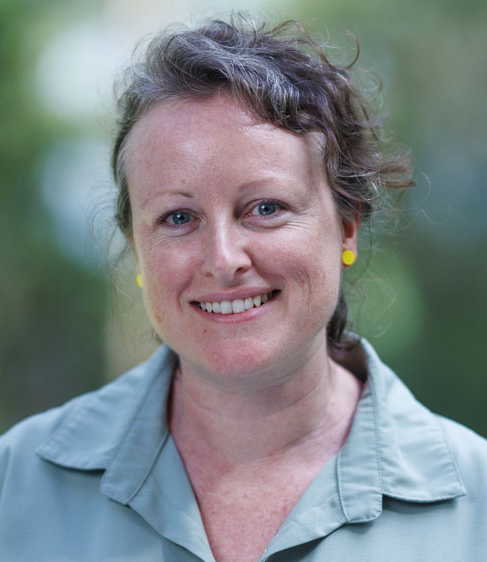
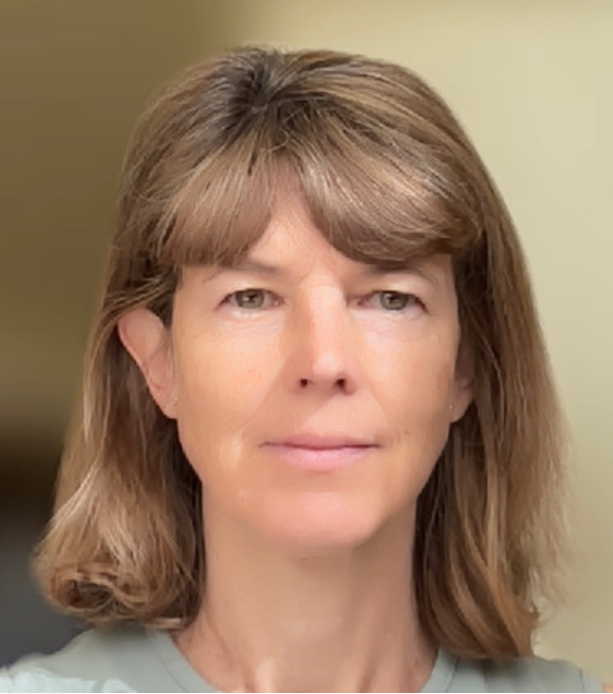
Professor Peter Grootenboer
Griffith Institute for Educational Research
Griffith University
Doctor Kym Fry
Griffith Institute for Educational Research
Griffith University
Conference Co-Chairs
Dr Kym Fry, Griffith University
Professor Peter Grootenboer, Griffith University
Proceeding Editors
Dr Jana Visnovska, The University of Queensland
Dr Emily Ross, The University of Queensland
Dr Seyum Getenet, University of Southern Queensland
Conference Program
Professor Kevin Larkin, Griffith University
Associate Professor Jodie Miller, The University of Queensland
Treasurer
Dr Margaret Marshman, University of Sunshine Coast
Members
Dr Saidat Adeniji, University of Southern Queensland
Dr Anne Bennison, University of Sunshine Coast
Rebecca Burtenshaw, University of Sunshine Coast
Gabi Cooper, Griffith University
Professor Merrilyn Goos, University of Sunshine Coast
Professor Mellony Graven, Rhodes University
Alexandra Laird, Griffith University
Paulina Sliedrecht, Queensland Association of Mathematics Teachers
Kristin Zorn, Griffith University
Tracey Reader, Griffith University
Professor Nathalie Sinclair
Simon Fraser University
As theories of embodiment become more prevalent in mathematics education research, researchers are attending to many aspects of student and teacher interactions including body movements, affect and sensory experiences. These are not always adequately captured by analyses of transcripts or conveyed through written journal articles. In this talk, I will discuss the use of re-enactments both as a method of accounting for experience and as a method of research communication. I argue that they offer the potential for more valid understandings and representations of mathematical activity.
BIOGRAPHY
Nathalie Sinclair is a Distinguished University Professor at Simon Fraser University. She is interested in the historical, philosophical and technological aspects of mathematical thinking and learning, focusing both on aesthetics and embodiment in mathematical activity, particularly in contexts involving digital technologies. She co-authored Mathematics and the Body: Material Entanglements in the Classroom (with Elizabeth de Freitas), I Can’t Do Maths: Why Children Say it and How to Make a Difference (with Alf Coles) and Time and Education: Time Pedagogy against Oppression (with Petra Mikulan). She also led the development of the multitouch applications TouchCounts (2014) and TouchTimes (2019) with Nicholas Jackiw.
Professor Mercy Kazima
University of Malawi
The Clements-Foyster Lecture is an annual award, established in honour of the two founding members of MERGA in 1976/1977, Professor Ken Clements (then at Monash University), and John Foyster (then based at the Australian Council for Educational Research (ACER)). The first Clements-Foyster lecture was given in 2005, by Professor David Clarke, and since then, each year one Australian, New Zealander or a member from the South East Asian rim countries, is invited to present the Annual Clements-Foyster Lecture.
Professor Janette Bobis
University of Sydney
Doing significant research is critical to building the quality of mathematics education research. But doing substantively significant research is inherently difficult because we are studying the unknown. The ability to clearly articulate or ‘sell’ the significance of our research often poses even a greater challenge to researchers. Nevertheless, without such statements of significance we are unlikely to win grants or have papers accepted for publication. In this presentation, I consider what it means when we say that research is significant. My reflections draw upon my own experiences and those of others as part of a ‘deep dive’ in search of significance in mathematics education research.
BIOGRAPHY
Janette Bobis is a professor of mathematics education in the Sydney School of Education and Social Work at The University of Sydney. Her research, teaching and publications focus on teacher learning in mathematics education, and student learning, mainly concerning the development of primary children’s computational thinking strategies, their engagement in mathematics and the impact of teaching interventions on each of these aspects.
Janette’s research, teaching and professional expertise are internationally recognised, having been awarded Senior Fellow by the UK Higher Education Academy, the Thompson Research Fellowship, two Vice Chancellor awards for teaching excellence, a Carrick Citation for Outstanding Teaching and Research Supervisor of the year award. Her program of research has included four ARC projects and over 14 externally funded research consultancies with national and state education authorities. In 2023, she was part of the ARC EMC3 research team that won the MERGA Research Award for making an outstanding contribution to mathematics education research in the past three years. Janette has previously also received the MERGA Beth Southwell Practical Implications Award for her research on teacher education and the MERGA Early Career Award. She has been a member of MERGA and attended conferences since 1991. She was the MERGA Vice President Research 2015-2018 and has served on the MERJ editorial board since 2016.
Since joining The University of Sydney as a lecturer of Primary Mathematics Education she has held several leadership roles, including Pro Dean and Associate Dean Research, Associate Dean Postgraduate & Doctoral Studies, Master of Teaching Program Director and is currently the Higher Degree Research Admissions Coordinator. She is committed to creating more effective ways of addressing the theory/practice nexus in mathematics education. Her vision is to empower teachers of mathematics with and through deeper understanding of their field and to this end, she strives to collaborate with teachers and teacher-researchers.
The Beginnings of MERGA
Preamble to the Annual Clements/Foyster Lecture
In the middle of 1976 John Foyster, who was then based at the Australian Council for
Educational Research (ACER), came to see me at Monash University, where I was in charge of the Mathematics Education program. John talked about how the Australian Science Education Research Association (ASERA) had recently been established, with Professor Richard Tisher (then of Monash University) as the prime mover. John wondered whether the time was ripe for a similar national group interested in mathematics education research to be established, and asked whether he and I might take steps to establish such a group.
My immediate reaction was yes, we should do it. Then came the doubts and reservations. How would the Australian Association of Mathematics Teachers (AATM) react to such an initiative? After all, AAMT already had a “Research Committee.” In any case, would there be enough mathematics educators in Australia, interested in such a group to make it a viable proposition? Who would provide the funds likely to be needed for the establishment of such a group?
It was John’s and my opinion that the AAMT Research Committee had not reached out to embrace most of the people lecturing in mathematics education in Australia at teachers colleges or in universities at the time. Intuitively, I thought Australia needed a group like the
one John was proposing. My intuition told me that AAMT was not the organisation to move towards the establishment of such a group.
John assured me that he would put up any funds needed to get the group going (and, hopefully, any group that was established would be able to pay him back within a few years). Hence we decided to proceed with the idea of establishing the group and to strike while the iron was hot, so to speak, by conducting a national conference at Monash University in the middle of 1977. I came up with the name “Mathematics Education Research Group of Australia” which John liked because of the acronym MERGA, which suggested a “merging together.” We sent out notices of our intention to form MERGA late in 1976. Neither of us knew many of the people who might be interested in joining such a group, so the notices were addressed to the “Mathematics Lecturers at…”
Soon after we had decided to go ahead, I heard of the existence of a group, based in New South Wales, called the Mathematics Education Lecturers’ Association (MELA). John and I talked about whether MERGA and MELA might become one from the outset, but we decided that the aims of MELA seemed to be sufficiently different from those that we envisaged for MERGA, focused far more on research than lecturing, that we should proceed with the MERGA idea.
And so it came to be that in May 1977, the first of what was to become the annual conference of MERGA took place. About 100 people attended, with papers frenetically being read from 9 am to about 10 pm, for three days, in a Rotunda Theatre at Monash University. Professor Richard Tisher was present at the start of the Conference, and talked of his experiences in establishing ASERA. Frank Lester, of Indiana University, was among those present. In the event, two volumes of papers read at the Conference were produced (the first volume being available on the first day of the Conference, and the second several months later).
At a post-Conference meeting it was decided that, yes, MERGA should be formed, that the second meeting would be at Macquarie University in May 1978, and that an annual conferences should be held each year at a different academic institution. At that second conference it was decided by those present that MERGA should continue and a constitution and election of offices would be decided on at the third conference to be held at the then Brisbane College of Education. And so MERGA was born.
Ken Clements
The following documents are essential to read and complete when considering submitting a short communication, round table or special working group to the MERGA conference (available in the Submission section of this website).
Submissions not exceeding one page are required for short communications, round tables and special working groups. The submissions must be prepared using the conference template, and can include essential references. They will be reviewed by the Editorial Team and, if accepted, will be published in the conference proceedings as one-page abstracts (not as papers). Presenters are invited to prepare a paper for distribution at the conference, but these papers will not be included in the proceedings.
Short communications are suitable for reports on research in mathematics education that do not fully meet the requirements for published papers. These might include works in preliminary stages, reports of pilot projects, initial reviews of literature, ideas or suggestions for future study, and briefer discussions of particular issues. Short communications allow new researchers to obtain feedback on projects in a constructive and supportive environment, and foster the building of links between researchers with similar interests.
Short communications are presented by author(s) only, allocated half of the time for research reports (in past, this was 20 minutes). At least 5 minutes is to be allocated for audience questions and open discussion.
Round tables are suitable for presenters seeking involved interaction with the audience in relation to their research or topic of interest in mathematics education, and for those sharing their insights and advice with the early career colleagues. These might include discussion of an emerging topic, co-analysis of provided student work, solving a mathematical task, or discussing the demands and benefits of reviewing for high quality journals. Round tables allow finding peers with similar research interests, exploration of new research avenues, and building the capacity of MERGA community.
Round tables are led by author(s) only, allocated the same time as research reports (in past, this was 40 minutes). The abstracts should make clear the interactive element of the proposed activity, with no more than 15 min of the session time in a presentation mode.
Special working groups are specialised Round Tables offered by the SWG teams to report on their progress, seek future directions, and new collaborators. The session organisers determine how to use the allocated 40 minutes and outline this in their 1-page description.
The Beth Southwell Practical Implications Award (BSPIA) recognises high-quality mathematics education that produces insights for the teaching profession and/or student learning.
The award consists of $500 and a plaque to be presented at the Conference.
Nomination process
There are two ways a paper can be nominated for the BSPIA:
Single and co-authored papers are eligible for consideration.
When you write your paper, please ensure that you observe all general paper submission requirements including the maximum page length.
Judging process
Submissions must be deemed eligible for publication in the Conference proceedings by the initial reviewing panel. Submissions accepted for presentation only will be excluded from consideration.
The judging panel will consist of two MERGA members and two AAMT nominees and will be chaired by the VP Development.
The judging criteria are:
Winners are notified four weeks prior to the Conference and are invited to present a keynote at the annual conference.
The Beth Southwell Practical Implications Award page on this website provides further information, including the history of the award and recent winners.
The following documents are essential to read and complete when considering submitting a research paper to the MERGA conference (available in the Submission section of this website).
Research papers can take two major forms:
1. Reports of empirical investigations
When empirical investigations are reported (such as in an experimental intervention, confirmatory study, or action research, etc.), the paper should also include
2. Reports that are not based on empirical research including:
When the work is a theoretical discussion, a position paper, a report of scholarly inquiry in progress, a review of literature, a theoretical study, a meta-study, an account of a new initiative, a reflective critique of practice or any mixture of these or other recognised scholarly forms, the material presented must be discussed critically, and alternative points of view relating to themes presented should be appropriately argued.
It is expected that presenting authors will have 40 minutes to present their work at the conference. At least 10 minutes must be allowed to field questions and comments from the audience.
Structure of research papers – All papers for publication in the conference proceedings should contain the following:
All papers must respect MERGA’s ethical guidelines relating to research work. Papers should not be more than the set length. In addition, papers must be: readable; free of grammatical, spelling and typographical errors; and adhere strictly to style requirements advertised by the conference proceedings Editorial Team.
Originality – Only research papers that are substantially different from work that has been published previously will be considered for publication in the conference proceedings and/or presentation at the conference.
Reviewing of research papers – Research papers will be blind reviewed by a panel of peers approved by the conference committee. The main purpose of the refereeing process is to contribute to the growth and development of quality practice in mathematics education research. Thus reviewers are asked to assist authors by providing helpful feedback and to comment on the suitability of papers for presentation at the conference. Accordingly, it will not be assumed that published papers presented at the conference will be as polished as articles in scholarly journals. Referees will be asked to assess papers being reviewed against the accepted norms for scholarly works presented at MERGA conferences, as set out above.
Each conference proceedings’ Editorial Team will exercise discretion over the reviewing process. Reviewers’ comments will be returned to the authors. Authors whose papers are not accepted for publication may be invited by the editorial panel to present their paper at the conference as a Short Communication, with a 1-page abstract (which they will be invited to provide) being published in the proceedings. Papers may be rejected outright, with no opportunity for presentation at the conference in an alternative form.
The following documents are essential to read and complete when considering submitting a research symposium to the MERGA conference (available in the Submission section of this website).
Presentation of groups of published papers related by theme in the form of a research symposium is encouraged. The symposium forum will be particularly suitable for presentations relating to a single large project or presentations that explore topical themes from different and/or related perspectives. Special Interest Groups [SIGs] are encouraged to consider the symposium option as a means for sharing and discussing current research.
A symposium should consist of no more than four presentations of about 15 minutes duration each. The written papers should be half the length of research papers as described for research papers. Both research report types – empirical or non-empirical – are acceptable as published symposium papers.
A brief overview of the symposium (limit one page), including a symposium title, an introduction to the theme/project, and a short introduction to each of the 3-4 contributions, must be submitted with the set of short papers. Please list the symposium convenors as the authors on the first page, and name the paper authors in the text description.
The symposium proposer will also nominate a person to chair the symposium, and a discussant can also be named if desired. This information should accompany the collection of papers submitted for review.
The set of symposium papers (and the overview) will be blind reviewed by a review panel. The main purpose of the reviews is the same as for published papers, and the same criteria are used. The reviewers will be asked to consider the cohesiveness of the set of symposium papers. They will indicate whether the symposium as a whole, and each paper within it, should be “accepted”, “rejected” or if it “requires revision”. If it is deemed that one, some or all of the papers are in need of revision, the reviewers will outline which papers need to be revised and provide suggestions for the required changes. When the revisions are made, the symposium papers will be re-submitted and the set of papers will be sent to the same review panel for further consideration. As with research papers, the final decision about which symposium papers will be published is at the discretion of the Editorial Team.
The date for submission of the collection of symposium papers is the same as for Early Bird papers. This date has been set for the benefit of the group of authors of symposia papers. Should the symposium papers require revision, the authors will have the time to make the corrections and resubmit the set of symposium papers to be re-reviewed by the original reviewers.
Presentation of symposia: Symposia are presented by author(s) only, usually within a 90 min block. At least 10 minutes must be allocated for audience questions and open discussion.
In order to encourage new researchers in mathematics education, MERGA sponsors an award to an author in the early part of her/his career. The award, for excellence in writing and presenting a piece of mathematics education research, consists of a plaque and a prize of $500 and is presented at the annual conference.
Applying for the award
Entry for the Early Career Research Award is by submission of a written paper for presentation at the conference through the Early Bird process. Conditions of eligibility, information about the judging process, and the criteria judges will observe are indicated below. If you are applying for the Early Career Research Award, please ensure that when you upload your paper on the conference website, you also send an email to the Conference Secretariat indicating that you are an entrant for the Early Career Research Award. Note that at some MERGA conferences there is also a form to complete or a box to tick on the registration form, so check the conference website carefully. Please note that co-authored papers ARE NOT eligible for entry into the Early Career Research Award, nor are Round Table or Symposium papers.
Rules and eligibility for the Early Career Award
The Early Career Research Award page on this website provides further information about this award, including a list of recent winners.
The Early Bird review process is a form of mentoring, principally for new researchers. However, anyone is eligible to make use of it. Research papers submitted through the Early Bird process must be received by the Early Bird due date (i.e., the closing date in January). They must meet the requirements as set out for MERGA Research Papers. Early Bird papers should be uploaded following a link on the conference website. Authors will be asked to create a login into Oxford Abstracts (our conference management system) and submit the blinded file (anonymised) in the correct template for review.
Early Bird papers undergo a double-blind MERGA reviewing process. There are three possible outcomes of the review, and actions the authors need to follow.
Authors are notified of the outcome as soon as possible (usually within a few weeks, and in time for resubmission). Letters are sent to authors to indicate (a) accepted for publication, (b) small revisions required, (c) or major rewriting required.