
Western Sydney University’s Parramatta South Campus is a vibrant hub of learning, innovation and community in one of Australia’s fastest-growing urban regions. Located on Victoria Road in the suburb of Rydalmere, New South Wales, the campus is part of the university’s broader Parramatta precinct, which includes Parramatta North and Parramatta City sites — all well connected by public transport and Western Sydney’s free shuttle bus network.
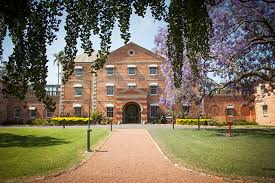
Set on a site with deep historical roots, the campus seamlessly blends heritage and contemporary learning environments. One of its notable landmarks, the Female Orphan School, is among the oldest surviving institutional buildings in Australia and reflects the area’s rich colonial history.
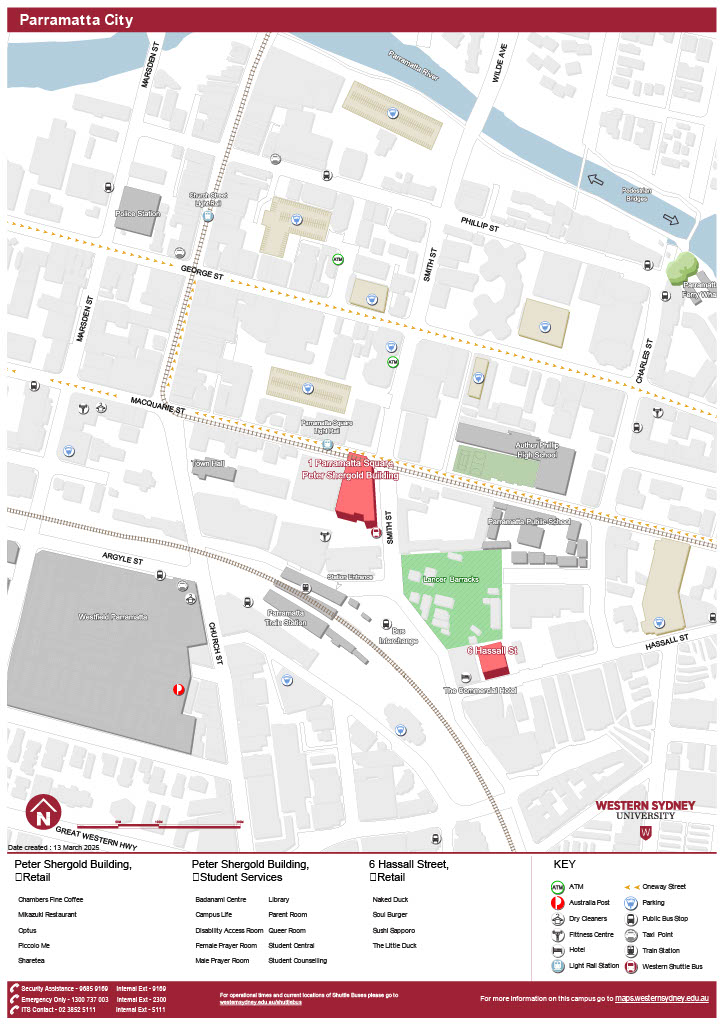
Map
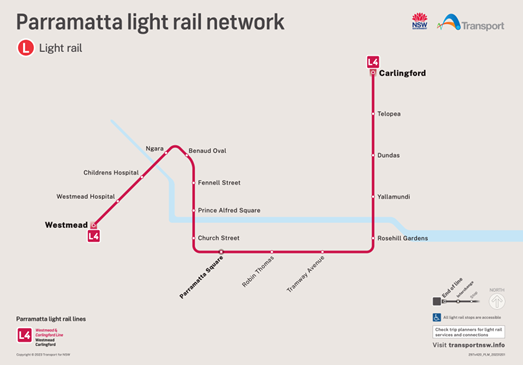
All indicated conference venues and accommodation are conveniently located between the Prince Alfred Square and Yallamundi light rail stations, providing easy and direct access to Western Sydney University’s Parramatta South Campus. A map of the Stage 1 light rail network is provided here.
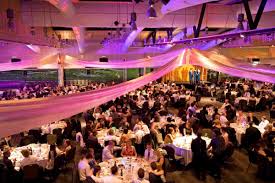
The MERGA48 conference dinner will be held on Wednesday 8 July 2026 at the iconic Rosehill Racecourse in Parramatta. This special evening offers delegates the perfect opportunity to connect socially, celebrate achievements of the conference awards, and enjoy dinner and dancing in a stunning riverside setting. With elegant event spaces, views of the racetrack and beautifully landscaped gardens, Rosehill Racecourse provides a memorable backdrop for an evening of networking, celebration, and fun.
Travelling to the Racecourse via Light Rail
To reach Rosehill Racecourse using public transport, start at Parramatta Station or Parramatta Square and connect with the L4 Parramatta Light Rail (Westmead & Carlingford Line). This modern light rail service runs regularly from early morning until about 1 am daily and links the Parramatta CBD with the Rosehill Gardens stop, which is right near the racecourse. Once you alight at Rosehill Gardens, it’s a short walk through Grand Avenue and under the pedestrian underpass to the racecourse entrance.
CommBank Stadium
If you are arriving in Parramatta a day early for MERGA48, why not experience one of Sydney’s premier sporting events? On Sunday, 5 July 2026, the Parramatta Eels will take on the Wests Tigers in the NRL Telstra Premiership at CommBank Stadium. This modern 30,000‑seat stadium is located on the Parramatta River and is renowned for its excellent sightlines, world-class facilities, and vibrant fan atmosphere — making it one of Western Sydney’s premier sporting and entertainment venues. (commbankstadium.com.au)
The stadium is easy to reach from central Parramatta:
Whether you’re a long-time rugby league fan or new to the sport, attending an NRL match is a fun and social way to connect with local culture and fellow delegates before the conference begins. Fans often arrive early to enjoy pre-game festivities, food, and drinks in the lively stadium precinct, providing a perfect warm-up for the week ahead.
Eat Street (Church Street, Parramatta)
Eat Street Parramatta, in the heart of the CBD, is a vibrant dining precinct offering everything from casual cafés and street food to international restaurants and bars. Perfect for conference delegates, it is ideal for coffee, dinner, or after‑hours drinks. With cuisines from Asian to Mediterranean and plenty of outdoor seating, the area buzzes in the evenings and on weekends. Just a short walk from Parramatta Station and local hotels, it is easy to visit. Reservations are recommended for larger groups, and nearby laneways and the riverside offer even more dining options.
This precinct offers cuisine and dining experiences that are suitable for every delegate. For a special dinner, try The Meat & Wine Co or Volcanos Steakhouse for premium steaks, while Ruse Bar & Brasserie offers modern Australian cuisine. For casual dining options include Kouzina Greco for Mediterranean flavours and 500 Degrees for contemporary favourites. With so many choices along the strip, it’s easy to grab dinner, a quick bite or after-hours drinks just steps from the CBD.
Dining Along the Parramatta River Foreshore
Just a short walk from Eat Street and Parramatta Station, the riverside precinct offers a range of cafés and restaurants with beautiful water views, perfect for lunch, dinner, or drinks. Mikazuki Riverside, a popular Japanese restaurant, serves fresh, beautifully presented dishes in a lively yet relaxed atmosphere, ideal for both groups and solo diners. River Canyon Bar & Grill offers modern Australian cuisine with a terrace overlooking the Parramatta River, making it a great spot for a leisurely dinner or after-conference meal. For Mediterranean flavours, Sahra by the River provides vibrant, share-style dishes and an inviting riverside setting. All three venues are open for dinner Monday through to Saturday, giving delegates plenty of options for evening dining with a scenic backdrop. Reservations for these popular spots are recommended.
SKYE SUITES, PARRAMATTA
30 Hunter St, Parramatta NSW 2150
Accommodation and Transport Information
Skye Suites Parramatta is located approximately seven minutes’ walk from the Parramatta Light Rail. Services operate from Prince Alfred Square and Parramatta Square, providing regular connections throughout the Parramatta area.
The hotel offers useful facilities for delegates, including on‑site meeting rooms and a business centre. Free Wi‑Fi is available throughout the property, and self‑parking is available for a daily fee (approx. AUD 45). Dining options include Husk & Vine Restaurant, a café, snack bar, and rooftop bar. Suites are apartment‑style with full kitchens, in‑room laundry facilities. Delegates also have access to a 25‑metre outdoor infinity pool and a fully equipped fitness centre.
Access to Western Sydney University – Parramatta South Campus
By Light Rail: The Western Sydney University (WSU) Parramatta South Campus (Rydalmere) is easily accessible via the Parramatta Light Rail. From Prince Alfred Square or Parramatta Square, board a westbound service towards Carlingford and alight at the Yallamundi stop. The campus is a short walk from the station. Total travel time is approximately 20 minutes.
By Car: The Parramatta South Campus is approximately a 10–15 minute drive from Skye Suites Parramatta, depending on traffic conditions. The most direct route is via Victoria Road, with on-campus parking options available for visitors.
SPECIAL CONFERENCE RATE
Skye Suites is offering MERGA delegates a 15% discount on the Best Available Rate.
Booking link: Skye Suites Parramatta
Promo Code: WSU26
PARKROYAL, PARRAMATTA
30 Phillip St, Parramatta NSW 2150
Accommodation and Transport Information
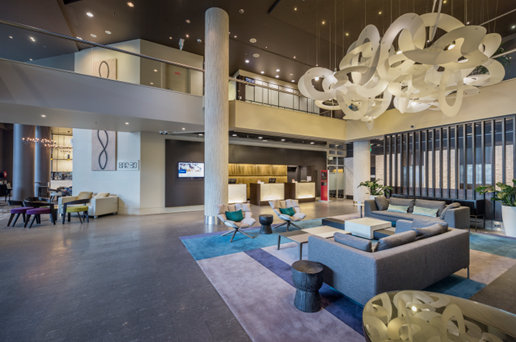
PARKROYAL Parramatta is located close to the Parramatta River and within easy reach of the Church Street dining precinct, Riverside Theatres, Rosehill Gardens Racecourse, and CommBank Stadium.
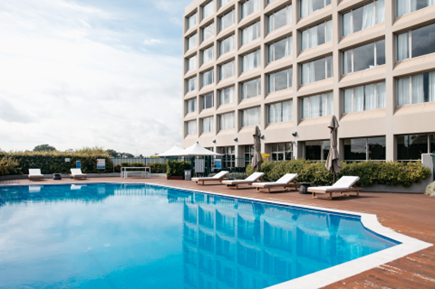
The hotel includes rooms and suites, a business centre, and an outdoor swimming pool. Complimentary access to a nearby fitness facility is available. Dining is offered at TABLE30 and BAR30, both located in the hotel lobby.
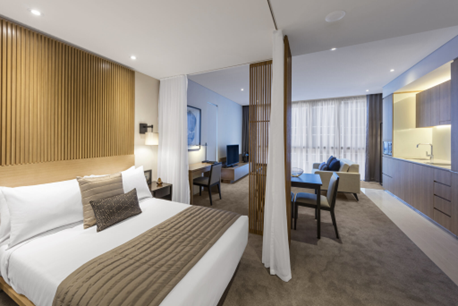
*Superior King Room pictured. Please note that this is a sample image—the actual room layout and appearance may vary depending on the room type selected by guests.
Access to Western Sydney University – Parramatta South Campus
By Light Rail: The Western Sydney University (WSU) Parramatta South Campus (Rydalmere) is easily accessible via the Parramatta Light Rail. From Parramatta Square or Church Street light rail stops, board a westbound service towards Carlingford. Travel through Prince Alfred Square and continue to Yallamundi. Alight at Yallamundi stop, then follow signage for a short walk to the campus. Total travel time is approximately 15–20 minutes.
By Car: The Western Sydney University (WSU) Parramatta South Campus (Rydalmere) is approximately a 10–15 minute drive from PARKROYAL Parramatta, depending on traffic conditions. The most direct route is via Victoria Road, heading west toward Rydalmere. Follow local signage for Western Sydney University, with on-campus parking options available for visitors.
SPECIAL CONFERENCE RATE
A corporate rate for MERGA delegates is available via the PARKROYAL booking link, including discounted overnight parking.
Booking link: Pan Pacific Group PARKROYAL
NOVOTEL, PARRAMATTA
350 Church St, Parramatta NSW 2150
Accommodation and Transport Information
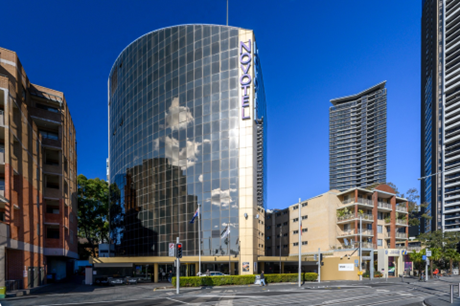
Novotel Sydney, Parramatta is located on Church Street, a short walk from the Albert Square light rail stop.
Facilities include an outdoor swimming pool, 24‑hour reception, on‑site restaurant, free Wi‑Fi, and access to the fitness and business centres. Additional features such as a water park (charges apply) and meeting facilities are also available.
Access to Western Sydney University – Parramatta South Campus
By Light Rail: The Western Sydney University (WSU) Parramatta South Campus (Rydalmere) is easily accessible via the Parramatta Light Rail. From Prince Alfred Square or Parramatta Square, board a westbound service towards Carlingford and alight at the Yallamundi stop. The campus is a short walk from the station. Total travel time is approximately 15–20 minutes.
By Car: The Parramatta South Campus is approximately a 10–15 minute drive from Novotel Parramatta, depending on traffic conditions. The most direct route is via Victoria Road, with on-campus parking options available for visitors.
SPECIAL CONFERENCE RATE
MERGA delegates receive a 20% discount on standard rates. The rate appears under a red tag labelled “Special Offer” once dates are entered into the booking system.
Booking link: Novotel Sydney Parramatta.
MERCURE, PARRAMATTA
106 Hassall St, Rosehill NSW 2142
Accommodation and Transport Information
Mercure Sydney Parramatta is within walking distance of the Rosehill Gardens light rail stop on the L4 line, approximately nine minutes from the hotel via James Ruse Drive and Grand Avenue.
Facilities include an outdoor swimming pool, spa and wellness packages, on‑site restaurant, free Wi‑Fi, room service, and access to a fitness centre. Additional features include a sun deck, terrace, garden, 24‑hour front desk, and both on‑site and private parking (charges apply).
Access to Western Sydney University – Parramatta South Campus
By Light Rail: The Western Sydney University (WSU) Parramatta South Campus (Rydalmere) is easily accessible via the Parramatta Light Rail. From the hotel, walk to the nearby Rosehill Gardens Light Rail Station. Board an L4 Westmead & Carlingford Line service and travel westbound toward Carlingford. Alight at Yallamundi Light Rail Station, then follow signage for a short 5-minute walk to the campus.
SPECIAL CONFERENCE RATE
MERGA delegates can access a 20% discount on advertised rates through the following rate. Once you have entered your check-in and check-out dates, the offer will appear with a red tag labelled “Special Offer.”
Booking link: Mercure Sydney Parramatta
New Zealand Visitors
New Zealand passport holders can apply for a Special Category Visa (subclass 444) on arrival into Australia.
International Visitors
If you are travelling to the conference from further abroad (neither an Australian nor New Zealand passport) then you will need to apply for one of the following:
Please see the Australian Government Immigration website (IMMI) Rules for Entering Australia Including Visa Types and the associated explore the visa options button.
There is a service charge of $20 AUD to use the Australian ETA app, and in most cases you will have the result of your ETA application immediately. There is no other charge payable for an ETA.
The eVisitor is free and usually takes less than 24 hours to process. Check current processing times here.
The Business Visitor Visa costs $200 AUD and usually takes 7–21 days to process.
Those outside the countries eligible for the ETA and eVisitor may need to apply for the Business Visitor Visa.
The Beginnings of MERGA
Preamble to the Annual Clements/Foyster Lecture
In the middle of 1976 John Foyster, who was then based at the Australian Council for
Educational Research (ACER), came to see me at Monash University, where I was in charge of the Mathematics Education program. John talked about how the Australian Science Education Research Association (ASERA) had recently been established, with Professor Richard Tisher (then of Monash University) as the prime mover. John wondered whether the time was ripe for a similar national group interested in mathematics education research to be established, and asked whether he and I might take steps to establish such a group.
My immediate reaction was yes, we should do it. Then came the doubts and reservations. How would the Australian Association of Mathematics Teachers (AATM) react to such an initiative? After all, AAMT already had a “Research Committee.” In any case, would there be enough mathematics educators in Australia, interested in such a group to make it a viable proposition? Who would provide the funds likely to be needed for the establishment of such a group?
It was John’s and my opinion that the AAMT Research Committee had not reached out to embrace most of the people lecturing in mathematics education in Australia at teachers colleges or in universities at the time. Intuitively, I thought Australia needed a group like the
one John was proposing. My intuition told me that AAMT was not the organisation to move towards the establishment of such a group.
John assured me that he would put up any funds needed to get the group going (and, hopefully, any group that was established would be able to pay him back within a few years). Hence we decided to proceed with the idea of establishing the group and to strike while the iron was hot, so to speak, by conducting a national conference at Monash University in the middle of 1977. I came up with the name “Mathematics Education Research Group of Australia” which John liked because of the acronym MERGA, which suggested a “merging together.” We sent out notices of our intention to form MERGA late in 1976. Neither of us knew many of the people who might be interested in joining such a group, so the notices were addressed to the “Mathematics Lecturers at…”
Soon after we had decided to go ahead, I heard of the existence of a group, based in New South Wales, called the Mathematics Education Lecturers’ Association (MELA). John and I talked about whether MERGA and MELA might become one from the outset, but we decided that the aims of MELA seemed to be sufficiently different from those that we envisaged for MERGA, focused far more on research than lecturing, that we should proceed with the MERGA idea.
And so it came to be that in May 1977, the first of what was to become the annual conference of MERGA took place. About 100 people attended, with papers frenetically being read from 9 am to about 10 pm, for three days, in a Rotunda Theatre at Monash University. Professor Richard Tisher was present at the start of the Conference, and talked of his experiences in establishing ASERA. Frank Lester, of Indiana University, was among those present. In the event, two volumes of papers read at the Conference were produced (the first volume being available on the first day of the Conference, and the second several months later).
At a post-Conference meeting it was decided that, yes, MERGA should be formed, that the second meeting would be at Macquarie University in May 1978, and that an annual conferences should be held each year at a different academic institution. At that second conference it was decided by those present that MERGA should continue and a constitution and election of offices would be decided on at the third conference to be held at the then Brisbane College of Education. And so MERGA was born.
Ken Clements
The following documents are essential to read and complete when considering submitting a short communication, round table or special working group to the MERGA conference (available in the Submission section of this website).
Submissions not exceeding one page are required for short communications, round tables and special working groups. The submissions must be prepared using the conference template, and can include essential references. They will be reviewed by the Editorial Team and, if accepted, will be published in the conference proceedings as one-page abstracts (not as papers). Presenters are invited to prepare a paper for distribution at the conference, but these papers will not be included in the proceedings.
Short communications are suitable for reports on research in mathematics education that do not fully meet the requirements for published papers. These might include works in preliminary stages, reports of pilot projects, initial reviews of literature, ideas or suggestions for future study, and briefer discussions of particular issues. Short communications allow new researchers to obtain feedback on projects in a constructive and supportive environment, and foster the building of links between researchers with similar interests.
Short communications are presented by author(s) only, allocated half of the time for research reports (in past, this was 20 minutes). At least 5 minutes is to be allocated for audience questions and open discussion.
Round tables are suitable for presenters seeking involved interaction with the audience in relation to their research or topic of interest in mathematics education, and for those sharing their insights and advice with the early career colleagues. These might include discussion of an emerging topic, co-analysis of provided student work, solving a mathematical task, or discussing the demands and benefits of reviewing for high quality journals. Round tables allow finding peers with similar research interests, exploration of new research avenues, and building the capacity of MERGA community.
Round tables are led by author(s) only, allocated the same time as research reports (in past, this was 40 minutes). The abstracts should make clear the interactive element of the proposed activity, with no more than 15 min of the session time in a presentation mode.
Special working groups are specialised Round Tables offered by the SWG teams to report on their progress, seek future directions, and new collaborators. The session organisers determine how to use the allocated 40 minutes and outline this in their 1-page description.
The Beth Southwell Practical Implications Award (BSPIA) recognises high-quality mathematics education that produces insights for the teaching profession and/or student learning.
The award consists of $500 and a plaque to be presented at the Conference.
Nomination process
There are two ways a paper can be nominated for the BSPIA:
Single and co-authored papers are eligible for consideration.
When you write your paper, please ensure that you observe all general paper submission requirements including the maximum page length.
Judging process
Submissions must be deemed eligible for publication in the Conference proceedings by the initial reviewing panel. Submissions accepted for presentation only will be excluded from consideration.
The judging panel will consist of two MERGA members and two AAMT nominees and will be chaired by the VP Development.
The judging criteria are:
Winners are notified four weeks prior to the Conference and are invited to present a keynote at the annual conference.
The Beth Southwell Practical Implications Award page on this website provides further information, including the history of the award and recent winners.
The following documents are essential to read and complete when considering submitting a research paper to the MERGA conference (available in the Submission section of this website).
Research papers can take two major forms:
1. Reports of empirical investigations
When empirical investigations are reported (such as in an experimental intervention, confirmatory study, or action research, etc.), the paper should also include
2. Reports that are not based on empirical research including:
When the work is a theoretical discussion, a position paper, a report of scholarly inquiry in progress, a review of literature, a theoretical study, a meta-study, an account of a new initiative, a reflective critique of practice or any mixture of these or other recognised scholarly forms, the material presented must be discussed critically, and alternative points of view relating to themes presented should be appropriately argued.
It is expected that presenting authors will have 40 minutes to present their work at the conference. At least 10 minutes must be allowed to field questions and comments from the audience.
Structure of research papers – All papers for publication in the conference proceedings should contain the following:
All papers must respect MERGA’s ethical guidelines relating to research work. Papers should not be more than the set length. In addition, papers must be: readable; free of grammatical, spelling and typographical errors; and adhere strictly to style requirements advertised by the conference proceedings Editorial Team.
Originality – Only research papers that are substantially different from work that has been published previously will be considered for publication in the conference proceedings and/or presentation at the conference.
Reviewing of research papers – Research papers will be blind reviewed by a panel of peers approved by the conference committee. The main purpose of the refereeing process is to contribute to the growth and development of quality practice in mathematics education research. Thus reviewers are asked to assist authors by providing helpful feedback and to comment on the suitability of papers for presentation at the conference. Accordingly, it will not be assumed that published papers presented at the conference will be as polished as articles in scholarly journals. Referees will be asked to assess papers being reviewed against the accepted norms for scholarly works presented at MERGA conferences, as set out above.
Each conference proceedings’ Editorial Team will exercise discretion over the reviewing process. Reviewers’ comments will be returned to the authors. Authors whose papers are not accepted for publication may be invited by the editorial panel to present their paper at the conference as a Short Communication, with a 1-page abstract (which they will be invited to provide) being published in the proceedings. Papers may be rejected outright, with no opportunity for presentation at the conference in an alternative form.
The following documents are essential to read and complete when considering submitting a research symposium to the MERGA conference (available in the Submission section of this website).
Presentation of groups of published papers related by theme in the form of a research symposium is encouraged. The symposium forum will be particularly suitable for presentations relating to a single large project or presentations that explore topical themes from different and/or related perspectives. Special Interest Groups [SIGs] are encouraged to consider the symposium option as a means for sharing and discussing current research.
A symposium should consist of no more than four presentations of about 15 minutes duration each. The written papers should be half the length of research papers as described for research papers. Both research report types – empirical or non-empirical – are acceptable as published symposium papers.
A brief overview of the symposium (limit one page), including a symposium title, an introduction to the theme/project, and a short introduction to each of the 3-4 contributions, must be submitted with the set of short papers. Please list the symposium convenors as the authors on the first page, and name the paper authors in the text description.
The symposium proposer will also nominate a person to chair the symposium, and a discussant can also be named if desired. This information should accompany the collection of papers submitted for review.
The set of symposium papers (and the overview) will be blind reviewed by a review panel. The main purpose of the reviews is the same as for published papers, and the same criteria are used. The reviewers will be asked to consider the cohesiveness of the set of symposium papers. They will indicate whether the symposium as a whole, and each paper within it, should be “accepted”, “rejected” or if it “requires revision”. If it is deemed that one, some or all of the papers are in need of revision, the reviewers will outline which papers need to be revised and provide suggestions for the required changes. When the revisions are made, the symposium papers will be re-submitted and the set of papers will be sent to the same review panel for further consideration. As with research papers, the final decision about which symposium papers will be published is at the discretion of the Editorial Team.
The date for submission of the collection of symposium papers is the same as for Early Bird papers. This date has been set for the benefit of the group of authors of symposia papers. Should the symposium papers require revision, the authors will have the time to make the corrections and resubmit the set of symposium papers to be re-reviewed by the original reviewers.
Presentation of symposia: Symposia are presented by author(s) only, usually within a 90 min block. At least 10 minutes must be allocated for audience questions and open discussion.
In order to encourage new researchers in mathematics education, MERGA sponsors an award to an author in the early part of her/his career. The award, for excellence in writing and presenting a piece of mathematics education research, consists of a plaque and a prize of $500 and is presented at the annual conference.
Applying for the award
Entry for the Early Career Research Award is by submission of a written paper for presentation at the conference through the Early Bird process. Conditions of eligibility, information about the judging process, and the criteria judges will observe are indicated below. If you are applying for the Early Career Research Award, please ensure that when you upload your paper on the conference website, you also send an email to the Conference Secretariat indicating that you are an entrant for the Early Career Research Award. Note that at some MERGA conferences there is also a form to complete or a box to tick on the registration form, so check the conference website carefully. Please note that co-authored papers ARE NOT eligible for entry into the Early Career Research Award, nor are Round Table or Symposium papers.
Rules and eligibility for the Early Career Award
The Early Career Research Award page on this website provides further information about this award, including a list of recent winners.
The Early Bird review process is a form of mentoring, principally for new researchers. However, anyone is eligible to make use of it. Research papers submitted through the Early Bird process must be received by the Early Bird due date (i.e., the closing date in January). They must meet the requirements as set out for MERGA Research Papers. Early Bird papers should be uploaded following a link on the conference website. Authors will be asked to create a login into Oxford Abstracts (our conference management system) and submit the blinded file (anonymised) in the correct template for review.
Early Bird papers undergo a double-blind MERGA reviewing process. There are three possible outcomes of the review, and actions the authors need to follow.
Authors are notified of the outcome as soon as possible (usually within a few weeks, and in time for resubmission). Letters are sent to authors to indicate (a) accepted for publication, (b) small revisions required, (c) or major rewriting required.